My blog has moved!

You should be automatically redirected soon. If not, visit
http://chefinyou.com
and update your bookmarks.

Showing posts with label Korean. Show all posts

Monday, March 30, 2009

Baechu (chinese cabbage) Kimchi - A korean specialty

DISCLAIMER : If you are not *hot* for spicy food, then this post will make your eyes water!!! Enter as per discretion and let it be known that you are one courageous gourmet!! :)
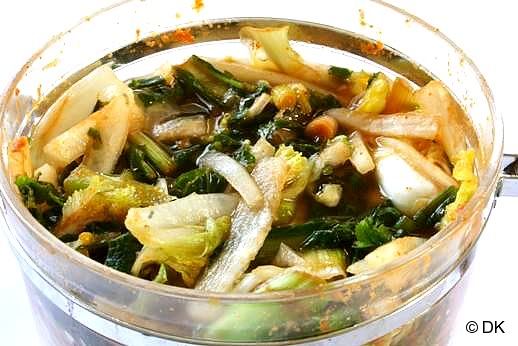
Korean Baechu Kimchi (chinese cabbage kinchee)

Anyone who is not new to making pickles at home, will not be intimidated from making Kimchi. But then, if you have not made them before, this post will show you how easy and simple it actually is, to make this Korean speciality by your own, without having to grab the kimchi jar at your local supermarket. Kimchi, also spelled gimchi or kimchee is a traditional korean side dish(banchan) and is made by fermenting vegetables. This was originally done with the purpose of preserving vegetables as a means of storage for the winters. Because of its unique flavours and the preserving tendancies, it has come to be enjoyed by the rest of the world too.
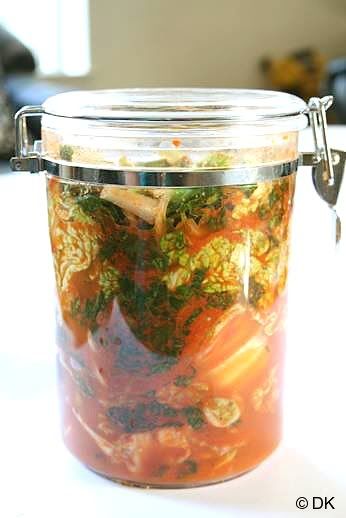
Korean Baechu Kimchi (chinese cabbage kinchee)

There are quite a few variations of making Kimchee, spicy Baechu(cabbage) Kimchi being the most popular which is what I have made for this post.I have this recipe from an "Authentic Korean cooking" cookbook which I have adapted a bit to my taste and availibility of ingredients. I have blanked out on the name of the author and will update the post with the same once I recall/find the author's name.
You can adjust the ingredients according to your taste buds. :)


    Ingredients

  • 1 large chinese (Napa) cabbage

  • 1 medium daikon radish

  • 3 scallions (spring onions), chopped

  • 1 bunch mustard leaves (optional)

  • 1 tsp minced garlic

  • 2" ginger, peeled and grated

  • 1/2 cup red chilli powder

  • 3 tbsp sugar

  • 2 cups sea salt (kosher salt)

  • 10 cups water


Method

Remove the outer leaves of the Napa cabbane. Cut of the edges. Seperate the leaves. Keep aside 3-4 leaves and then chop the rest into quarters.
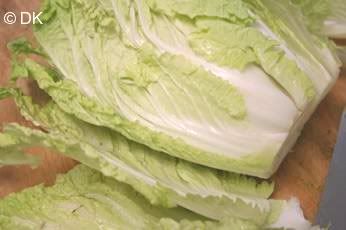
Korean Baechu Kimchi (chinese cabbage kinchee)

In a large skillet, add the 10 cups of water along with salt. Give it a swirl and then soak the cabbage leaves for 6-8 hours.
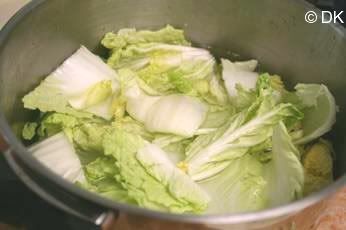
Korean Baechu Kimchi (chinese cabbage kinchee)

After soaking, remove the leaves, wash/rinse in cold water and squeeze out any excess water. Set the salted water aside. Dont throw it away. Slice the daikons into matchsticks. Chop the mustard greens if using. In a bowl, add the ginger garlic paste and the chilli powder -
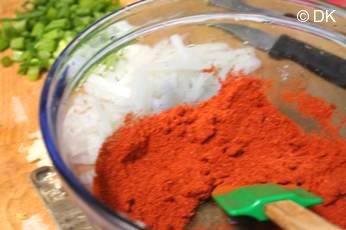
Korean Baechu Kimchi (chinese cabbage kinchee)

make it into a paste by adding about 1/2 cup of water.
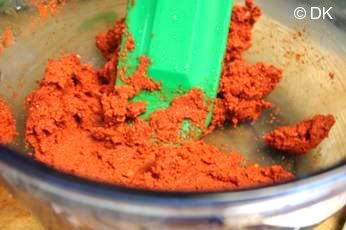
Korean Baechu Kimchi (chinese cabbage kinchee)

To this paste, add the daikon,scallions,mustard greens and mix until blended. Gloved hands are your best bet.
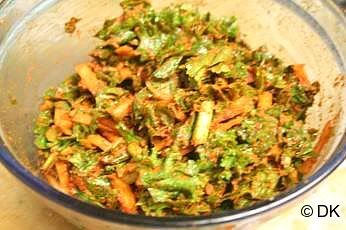
Korean Baechu Kimchi (chinese cabbage kinchee)

now add the squeezed out cabbage and blend it along with the rest of the chilli mixture.
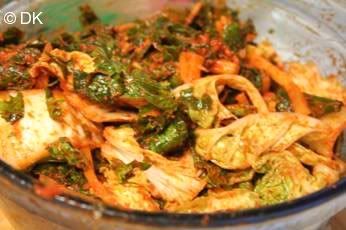
Korean Baechu Kimchi (chinese cabbage kinchee)

Take one of the leaves ( which has not been chopped), set it on the board. Put few spoonfuls of this spiced mixture on it.
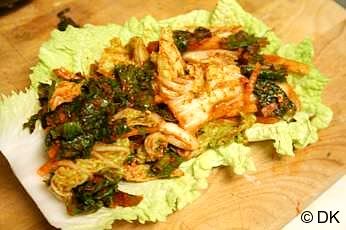
Korean Baechu Kimchi (chinese cabbage kinchee)

Now place another cabbage leave as a layer above it and then repeat the process until all the leaves have been used.

Korean Baechu Kimchi (chinese cabbage kinchee)

Take a Jar and lift this napa-spice layers and push it down the jar. Pack it tightly.
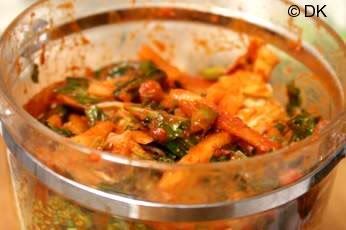
Korean Baechu Kimchi (chinese cabbage kinchee)

Add any additional mixture to the jar on top.
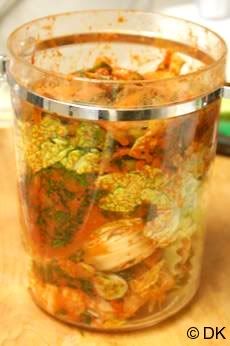
Korean Baechu Kimchi (chinese cabbage kinchee)

Use the salt water (used for soaking the cabbage) and pour it down the jar to the brim.
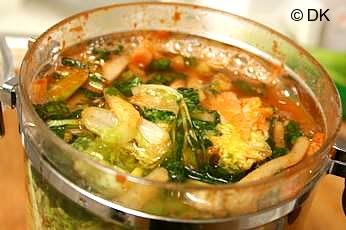
Korean Baechu Kimchi (chinese cabbage kinchee)

Set aside this jar for 2-3 days ( for the process of fermentation) and then enjoy it with rice or any other korean main dish. There you just made yourself an authentic spicy korean vegetable preserve.
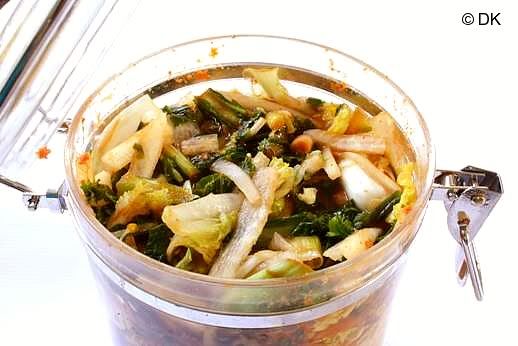
Korean Baechu Kimchi (chinese cabbage kinchee)


This post finds its way to A.W.E.D Korean hosted by dear PJ

Friday, March 27, 2009

Sanchae Bee Bim Bap - Healthy Korean main course coming your way

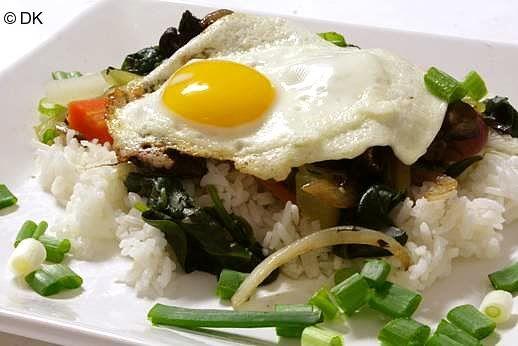
I personally hold the opinion that Asian cuisine is one of the healthiest of all - of course provided that you cook them at home and not at restaurants. You could say the same for any cooking, but my choice, again among those, would be Asian cooking one of them being Korean. My personal exposure to Korean food is not very vast except for the famous and popular dishes and few not so well known from my research of the cuisine. Among the popular ones, Bee Bim Bap (or Beebimbop,bibimbap) holds a prominent place. It is one dish meal with layers stacked one on top of the other and is predominantly made with beef.

Beebimbap,Beebimbop,Bee Bim Baap

Sanchae Bibimbap which means Fresh Vegetable Bibimbap uses lots of vegetables along with the meat. I have this recipe from an Authentic Korean Cooking cookbook ( I misplaced the author’s name) from which I adapted this recipe to make it meatless and added a wee bit more ingredients to suit my palate. It’s pretty simple to make and instead of the Portobello mushroom which I used to replace the meat, non-vegetarians can use Beef to do the same process (simply marinate for more time than what is specified in this recipe)


    Ingredients

  • 1 cup small red radish, cut into thin slices

  • 1 medium daikon radish, peeled and sliced into thin strips

  • 1 carrot, sliced into strips

  • 1 cucumber, sliced

  • approx 4-5 cups spinach, washed with stems discarded (baby spinach works v well)

  • About 4-5 large portobello mushrooms,cleaned and chopped

  • 1 small yellow onion,sliced

  • 2-3 cups cooked Jasmine rice

    For the Marinade

  • 2 tbsp Soy Sauce

  • 3 tsp sugar

  • 4 tsp spring onions/scallions, finely chopped

  • 2 tsp minced garlic/garlic paste

  • 2 tsp coarsely ground toasted sesame seeds

  • 2 tsp sesame oil

  • 1 tsp Rice vinegar

  • 1/4 tsp black pepper

  • salt taste ( make sure to add less salt that your usual amount since Soy sauce also contains sodium)

  • Korean hot chilli sauce to serve (optional)


Method

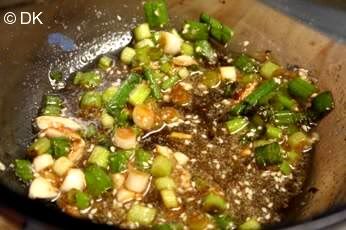
In a bowl, add all the ingredients for the marinade.

Beebimbap,Beebimbop,Bee Bim Baap

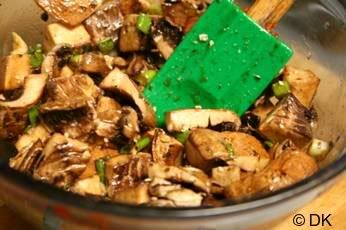
Add the chopped mushrooms, give it a toss and close it with a plastic wrap and let it sit for at least 30 min.

Beebimbap,Beebimbop,Bee Bim Baap

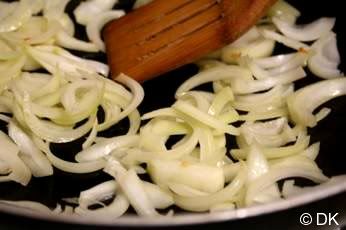
Steam all the vegetables except the spinach and onions. Just 2-3 minutes before removing the vegetables add the spinach and let it wilt. Alternatively if you dont like your cucumbers steamed, then prepare a marinade with little Vinegar,sugar and salt and marinare your cucumbers in it until before serving. In a pan, cook the onions until soft.

Beebimbap,Beebimbop,Bee Bim Baap

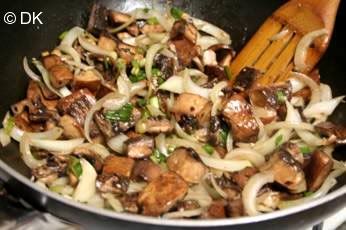
Now add the mushroom along with the marinade until cooked. They look just like beef dont they ? ;) Alternatively prepare fried eggs, if you like eggs. They are optional.

Beebimbap,Beebimbop,Bee Bim Baap

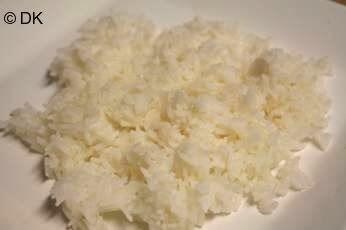
Next set the plate. The first layer is the cooked jasmine rice

Beebimbap,Beebimbop,Bee Bim Baap

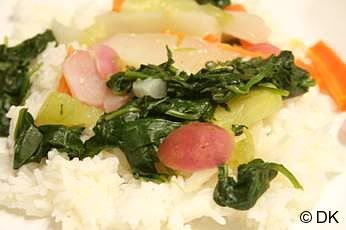
Top it off with steamed vegetables

Beebimbap,Beebimbop,Bee Bim Baap

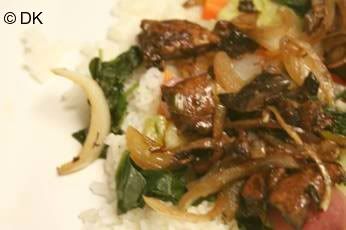
layer that with the cooked mushrooms

Beebimbap,Beebimbop,Bee Bim Baap

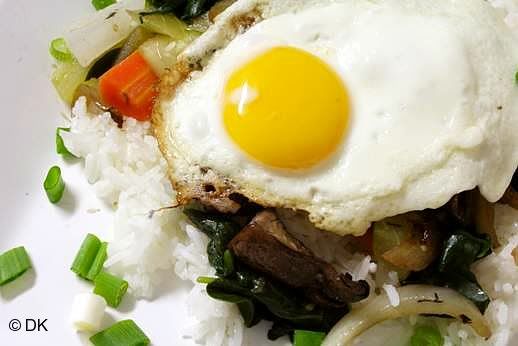
Finally place the fried eggs on top of them.

Beebimbap,Beebimbop,Bee Bim Baap

Tada, you just made the popular Korean dish at home, made healthier, wealthier and with no major effort. And yes you save quite some money by not selecting to eat at the restaurant. The ingredients cost quite less too :)


This main dish finds its way to the event close to my heart A.W.E.D hosted by dear PJ this month with Korean as its theme. Thanks PJ for the beautiful theme.